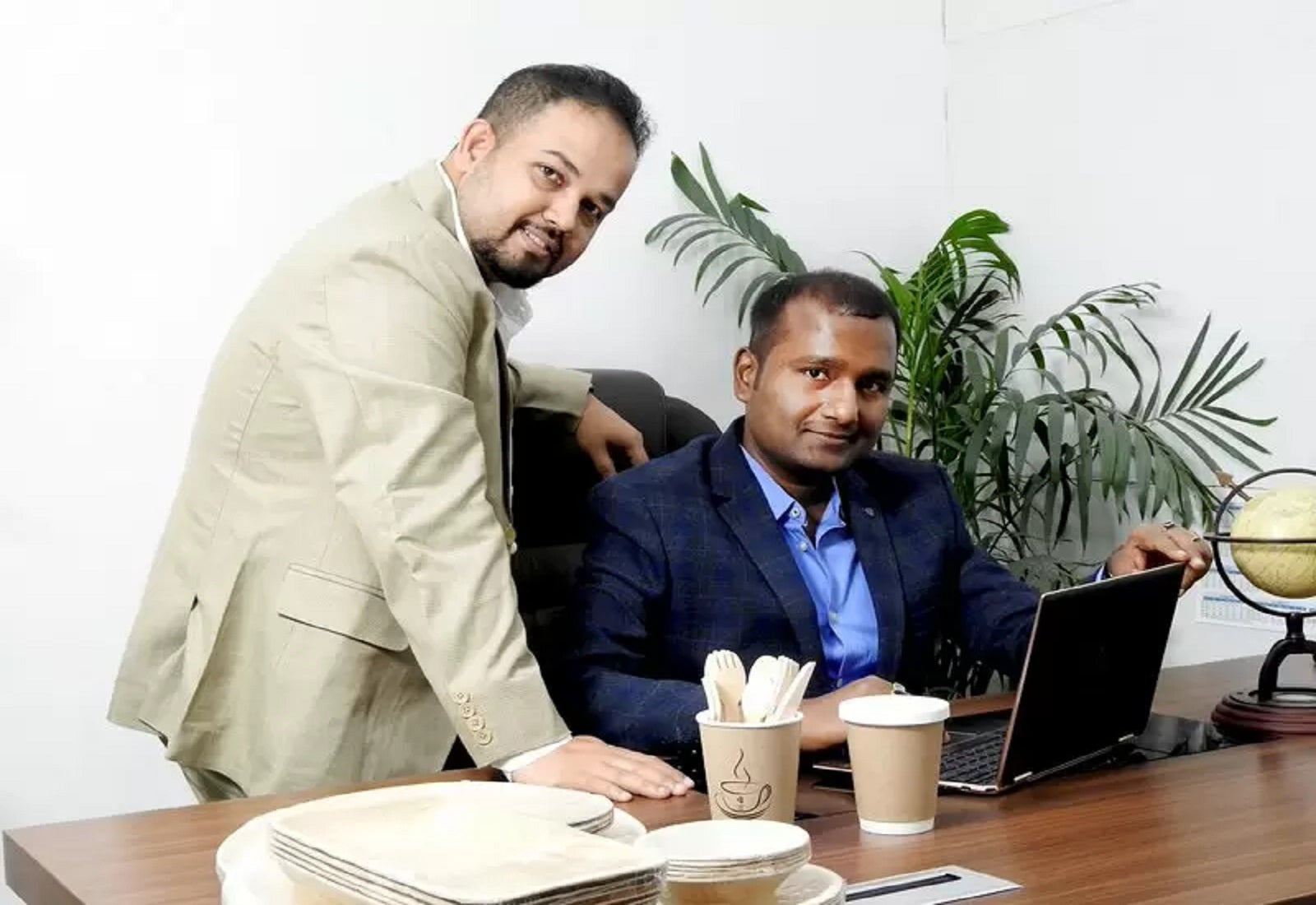


Their story can make a perfect Bollywood script. Two youngsters from diverse family backgrounds and hailing from different states became friends at Institute of Integrated Learning in Management University (IILM), Greater Noida, while doing their MBA.
In their MBA first year, Vaibhav Jaiswal and Amardeep Bardhan participated in an inter-collegiate business plan contest, and bagged the first prize for their eco-friendly plates made of areca palm leaves.
The duo went on to win more contests with the same product, competing against students from prestigious institutions such as BITS Pilani, the various IITs and IIMs, and eventually launched their own company with Rs 20,000 in 2011.
“We formulated a business plan for developing bio-degradable dinnerware using leaves of the areca palm trees and avoiding plastic and thermocol materials,” says Amardeep, who was just 21 when they started Prakritii - Cultivating Green.
Ten years later, they have grown into a Rs 18 crore turnover company with stakes in pharmaceuticals and FMCG exports as well. Prakritii was initially a partnership firm, but later became AV Prakritii International Private Limited in 2018.
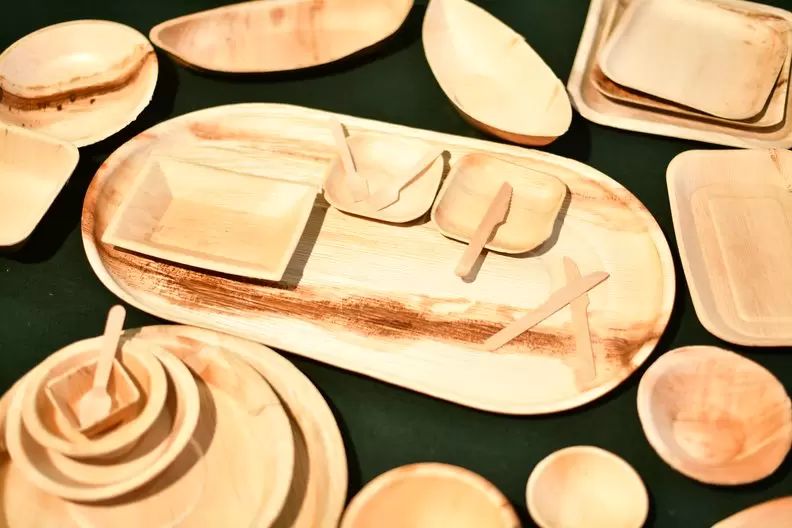
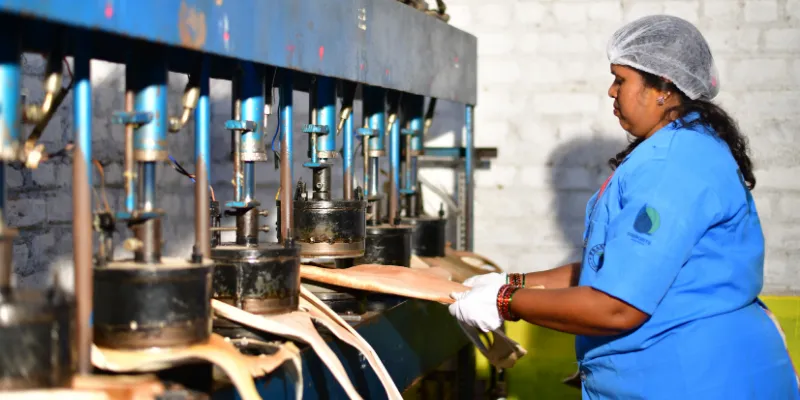
With factories at Coimbatore in Tamil Nadu and Bhadravathi in Karnataka, today Prakritii produces around 75 varieties of dinnerware products, including plates, bowls, spoons, forks and knives.
Their products are exported to many countries such as USA, Canada, Australia, New Zealand and Saudi Arabia.
How the duo built the company from scratch, after winning a series of college level business competitions, and making enough money in the form of cash prizes that took care of about 70 per cent of their tuition fees and all their recreational expenses, is an inspiring journey indeed.

Amardeep is a year younger to Vaibhav and hails from the small town of Tinsukia in Assam. His father passed away when his mother was 6-7 months pregnant and he grew up under a single parent.
“We were not financially strong. My mother was into accounts and worked with a private bank. She also gave home tuitions to make some extra money,” Amardeep remembers his struggling growing up years.
He did his schooling at Vivekananda Kendriya Vidyalaya in Tinsukia, and graduated in commerce from Tinsukia College in 2009.
Vaibhav hails from a well-to-do family in Varanasi. His father is a scrap trader. He studied at St John’s School in Varanasi and went to Delhi for doing his graduation in commerce from Bhagat Singh College.
It was Vaibhav who proposed the idea of plates made of areca plam leaves for the first business plan contest they entered in 2009.
In the following months till they completed graduation, Vaibhav and Amardeep participated in about 15-20 competitions held at various institutions and won prizes almost everywhere. In one of the contests they won, they were felicitated at a function attended by top dignitaries including Prince Charles.

“We stood either first or second at these contests and our product became very popular,” says Vaibhav. “We earned about 70 per cent of our college fees from the cash prizes and divided the money between us. We had a nice time splurging the money.”
Both got placed in good companies after graduation, but they left their jobs in less than six months and started Prakritii in 2011.
Since Assam had a number of betel nut trees, whose leaves were used to make their products, they set up the first unit at Tinsukia, Amardeep’s hometown, with two first generation machines.
“We received our first order worth Rs 11,000 from an NRI family in Kanpur, Uttar Pradesh, in 2011, before we had our organisation registered. Our first distributor is also from Kanpur,” says Vaibhav.
But they faced operational challenges at Tinsukia and decided to take over a sick unit in Coimbatore, Tamil Nadu, the next year and started production there.
“Our first year turnover was about Rs 6 lakh. It was Rs 20 lakh in the second year and it kept on increasing,” says Vaibhav.
They used blogs, Facebook, and other social media platforms to promote their products. They also got business from supermarkets and catering firms, besides getting leads from India Mart where they were listed.

“I focused on export market and met officials at embassies. Each Embassy has a trade division and I used to approach them and give short presentations. One out of 20 visits would click, and we were happy with the results,” says Amardeep.
Business swelled in September 2014, when they started exporting. The first order worth Rs 90,000 came from Melbourne, Australia, which was followed by a bigger one, a full container shipment to a company based in Germany.
“We were to deliver 1.20 lakh plates in two months but we took four months to deliver. That order was worth Rs 15 lakh,” says Vaibhav. “Today, we export to around 18 countries.”
As an eco-friendly company, they don’t cut any trees and make their products from only naturally shed leaves. Their products are free of any chemicals.
“We are now an international brand,” says Vaibhav. “We meet all the European and US standards. We are assuming the market might be slow this year but it will pick up from next year.”
On the personal front, Amardeep, who is married and blessed with a son, enjoys playing badminton. Vaibhav is single, loves travelling, and likes to read fiction and biographies of successful people.

At the absolute starting point of this pandemic, we understood the significance of disposables and the huge need for dispensable cutlery and crockery. The worldwide pandemic has created a shift in how and in what we eat. As eateries across the Capital offer takeout in such troublesome crossroads, the methods for expendable bundling which has ended up being outstanding amongst other benefits to people in general. However, even now, a portion of cafés serve clients in plastic utensils and takeout boxes, and compostable cups.

Undeniably this pandemic gave a colossal ascent to the utilization of expendable items. People in limited numbers are invited to homes during the lockdown and ordering in, ensured cafés use disposables for conveyance purposes.
Coronavirus stays on plastic surfaces longer than most different materials, thus natural flatware disposables give a better outcome in our everyday lives. The advantageous of disposables gives us the opportunity of eating any place, being more secure and eating cleaner.

Various factors have driven people to use disposables, and this has had a significant influence. It has been widely observed that device reprocessing is frequently associated with residual contamination, which is indeed left by reprocessing agents that fail to reach difficult-to-reach parts of reusable equipment.

The rising demand for disposables like Areca/palm leaf plates, espresso cups and plates made of bamboo and wooden cutlery is best suited in such difficult situations. The cheap availability of disposable cutlery makes it a great option for the general public, including those who are infected with the virus.
READ MORE- https://ianslife.in/life-style/disposal-cutlery-playing-important-role-during-pandemic
This Festive season,Prakritii Cultivating Green, the first ‘Made-in-India’ range of organic products in the lifestyle category has urged the people to avoid using harmful plastic cutlery and switch to biodegradable cutlery by them. Prakritii provides complete tableware products solution to customers and brands across the globe.
Prakritii – Cultivating Green took form in the year 2011 by Vaibhav Jaiswal and Amardeep Bardhan, and since then they have been making waves with its dinnerware made with Arecanut Sheaths (leaf extensions) naturally shed from Areca (Palm) trees and are widely acclaimed in United States of America (USA), Canada, Australia, New Zealand, Saudi Arabia, UAE, Israel, Kenya, Egypt, South Africa, Russia, CIS Countries, South East Asia, Japan, Mexico, Brazil, Argentina, Panama, United Kingdom, Germany, France, Sweden, Spain, Denmark, Baltic & Scandanivian countries to name a few.
Product Features:
All the products from Prakritii has India’s first-
1.100% nature biodegradable made from fallen leaves which leads to no cutting down of plants and trees
2.Natural and Attractive which makes it Stylish, Elegant and Unique
3. Organic and Eco-Friendly with no glues, chemicals, plastics, waxes and toxins
4.Durable and Versatile which stands up to hot foods, liquid and direct sunlight around 6 to 8 hrs
5.Easy compostable within 7-10 days
6.Safe for Oven, microwave and refrigerator
According to, Vaibhav Jaiswal & Amardeep Bardhan, Co-Founder of Prakritii ”Hygienic food practices have always been a part of a healthy lifestyle. This festive season, we want people and brands to switch to biodegradable tableware and move a step closer towards the healthy lifestyle.”
“Prakritii dinnerware is made out of fallen leaves which are of no use in general. So, this usage gives the product its uniqueness. If these leaves are not used, it simply decomposes or being thrown into the pit. They collect these fallen leaves and mold them to be used as dinnerware, the best elegant-looking dinnerware which is eco-friendly. After one use, it can be dumped into a pit that decomposes itself in 7-10 days. “,they added.
Amardeep Bardhan and Vaibhav Jaiswal started Prakritii Cultivating Green in 2012 in Delhi. They began sourcing areca nut leaves from Assam to make biodegradable plates in their Tamil Nadu facility.

As they graduated from IILM Graduate School Of Management in Gurugram, Amardeep Bardhan and Vaibhav Jaiswal came up with a business idea. The duo felt strongly about the adverse environmental impact created by the use of plastic and polymer plates. Looking to address the issue, Amardeep and Vaibhav decided to make areca leaf plates as a viable alternative to plastic plates. They decided to source the leaves from Amardeep’s home state of Assam, which had an abundance of areca leaves, to make eco-friendly and, disposable plates. This eventually led them to start Prakritii Cultivating Green in 2012, which was incubated in Assam and operated from Delhi.
Amardeep tells SMBStory:
“We arranged resources on a small scale and began Prakritii with Rs 20,000. Setting up a manufacturing unit in Coimbatore, Tamil Nadu, we began producing areca nut leaf plates in various shapes and sizes using the leaves sourced from Assam.”
Initially, the duo sold their plates to caterers and event organisers who would use the products at large gatherings and parties. After seeing the growing popularity, they expanded their product portfolio to include eco-friendly cutlery, glasses, stirrers, etc.
Today, Prakritii is seeing an annual turnover of Rs 18 crore, and is generating employment for 120 people directly and for 700 people indirectly, the founders claim.

The eco-friendly advantage
Plastic plates are non-biodegradable and take hundreds, and sometimes thousands of years to decompose. All the while, they release toxic substances into the soil and groundwater.
Plates made from biodegradable materials such as areca leaves do not damage the environment. Vaibhav, explaining Prakritii’s range of tableware made from areca leaves, says:
“Our range is 100 percent free from chemicals, lacquers, glues, bonding agents, or anything toxic that harms food and our environment. We make our areca leaf products using only steam, heat, and pressure.”
He adds that Prakritii’s plates are made using fallen areca leaves. This is unlike other types of biodegradable plates, such as those made from bamboo, which require trees to be felled.
The areca leaves have another advantage - they are highly oxygenated and keep fruits and raw vegetables fresh for extended periods. The versatile plates can also be used in the oven, microwave, and refrigerator, claims Vaibhav.
The pricing per piece starts at Rs 1 and goes up to Rs 40. The founders say Prakritii’s plates take between 12 and 15 days to decompose in a home pit, and cause no harm to the environment.
Manufacturing and retail setup
The founders faced language and cultural differences when setting up their facility in Tamil Nadu. As a small, manufacturing enterprise, it also took time to source raw materials in the required quantities, ensure steady electricity supply, purchase the right equipment, etc.
But Amardeep and Vaibhav persevered, and expanding the use cases of their areca leaf products, grew Prakritii into a Rs 18 crore revenue business.
Amardeep says, “People started understanding how our eco-friendly products could act as alternatives to plastic in various situations. So we started making wooden cutlery, paper glasses, takeaway boxes, and more.”
At present, Prakritii also has a manufacturing unit in Bhadravati, Karnataka. Over 80 ancillary units run by self-help groups (SHGs) also manufacture products for the company.

“Our target customers include wholesalers and distributors, packaging houses, hotels and restaurants, caterers and event organisers, and more. We offer them competitive prices and incentives on volumes,” Amardeep says, adding that Prakritii’s products are also available on ecommerce portals.
For the business, competitors include small manufacturers of similar products. But the entrepreneurs believe their extended product portfolio is a complete solution and is an advantage for Prakritii.
Vaibhav says, “We also hold certifications showing our products comply with norms as per the US and European standards. This helps us pitch our products in the export market.”
COVID-19 impact and future plans
As hotels, cafes, and restaurants were shut and events banned during the pandemic-induced lockdown, Prakritii saw a sharp decline in sales. However, the business had zero debt, claim the founders, and used its reserves and surplus to stay afloat without sacking any employees.
“As things return to normal, we have sustained the business, but the loss has not yet been fully recovered. Now, the pandemic is set to become a game-changer for us as the hospitality industry moves from using reusable crockery to eco-friendly, disposable tableware,” says Amardeep.
In the next five years, the global biodegradable cutlery market is expected to expand at a CAGR of around five percent, according to a ResearchAndMarkets report.
Prakritii now plans to expand its production capacities and diversify its product line to meet this escalating demand for eco-friendly and sustainable cutlery.
The founders say as the world increasingly understands the adverse impact of plastic on the environment, Prakritii is poised to play a role in replacing single use plastic across use cases.
Read more at: https://yourstory.com/smbstory/ecofriendly-biodegradable-plates-areca-leaves-prakritii

This Festive season, Prakritii Cultivating Green, the first ‘Made-in-India’ range of organic products in the lifestyle category has urged people to avoid using harmful plastic cutlery and switch to biodegradable cutlery by them. Prakritii provides complete tableware products solutions to customers and brands across the globe.
Prakritii – Cultivating Green took form in the year 2011 by Vaibhav Jaiswal and Amardeep Bardhan, and since then they have been making waves with its dinnerware made with Arecanut Sheaths (leaf extensions) naturally shed from Areca (Palm) trees and are widely acclaimed in United States of America (USA), Canada, Australia, New Zealand, Saudi Arabia, UAE, Israel, Kenya, Egypt, South Africa, Russia, CIS Countries, South East Asia, Japan, Mexico, Brazil, Argentina, Panama, United Kingdom, Germany, France, Sweden, Spain, Denmark, Baltic & Scandanivian countries to name a few.
Product Features:
All the products from Prakritii have India’s first-
According to, Vaibhav Jaiswal & Amardeep Bardhan, Co-Founder of Prakritii ” Hygienic food practices have always been a part of a healthy lifestyle. This festive season, we want people and brands to switch to biodegradable tableware and move a step closer towards a healthy lifestyle.”
“Prakritii dinnerware is made out of fallen leaves which are of no use in general. So, this usage gives the product its uniqueness. If these leaves are not used, it simply decomposes or being thrown into the pit. They collect these fallen leaves and mold them to be used as dinnerware, the best elegant-looking dinnerware which is eco-friendly. After one use, it can be dumped into a pit that decomposes itself in 7-10 days. “, they added.
Vaibhav Jaiswal and Amardeep Bardhan from different families and hailing from various states began an Eco-Friendly Business. They became companions at Institute of Integrated Learning in Management University (IILM), Greater Noida, while doing their MBA.
In their MBA first year, Vaibhav Jaiswal and Amardeep Bardhan took part in a between university strategy challenge, and stowed the main prize for their eco-accommodating plates made of areca palm leaves.
They proceeded to win more challenges with a similar item, going up against understudies from lofty foundations like BITS Pilani, the different IITs and IIMs, and at last dispatched their own organization with Rs 20,000 out of 2011.
“Amardeep was not monetarily solid. My mom was into accounts and worked with a private bank. She likewise gave home educational costs to bring in some additional cash,” Amardeep recollects his striving growing up years.
He did his tutoring at Vivekananda Kendriya Vidyalaya in Tinsukia, and graduated in trade from Tinsukia College in 2009.
Vaibhav hails from a wealthy family in Varanasi. His dad is a piece merchant. He learned at St John’s School in Varanasi and went to Delhi for doing his graduation in trade from Bhagat Singh College.
It was Vaibhav who proposed plates made of areca plam leaves for the principal strategy challenge they entered in 2009.
Before long till they finished graduation, Vaibhav and Amardeep took an interest in around 15-20 rivalries held at different organizations and won prizes all over the place. In one of the challenges they won, they were congratulated at a capacity went to by top dignitaries including Prince Charles.
They stood either first or second at these challenges and our item turned out to be well known,” says Vaibhav. “Both of them acquired around 70% of our school charges from the monetary rewards and split the cash between us. Vaibhav Jaiswal and Amardeep Bardhan made some pleasant memories going overboard the cash.”
Both got put in great organizations after graduation, however they found employment elsewhere in under a half year and began Prakritii in 2011.
Since Assam had various betel nut trees, whose leaves were utilized to make their items, they set up the main unit at Tinsukia, Amardeep’s old neighborhood, with two original machines.
“They figured a strategy for creating bio-degradable dinnerware utilizing leaves of the areca palm trees and keeping away from plastic and thermocol materials,” says Amardeep, who was only 21 when they began Prakritii – Cultivating Green.”
After ten years, they have developed into a Rs 18 crore turnover organization with stakes in drugs and FMCG trades too. Prakritii – Cultivating Green was at first an organization firm, however later became AV Prakritii International Private Limited in 2018.
With manufacturing plants at Coimbatore in Tamil Nadu and Bhadravathi in Karnataka, today Prakritii produces around 75 assortments of dinnerware items, including plates, bowls, spoons, forks and blades.
Their items are sent out to numerous nations like USA, Canada, Australia, New Zealand and Saudi Arabia.
How the couple fabricated the organization without any preparation, in the wake of winning a progression of school level business contests, and bringing in sufficient cash as monetary rewards that dealt with around 70% of their educational expenses and all their sporting costs, is a motivating excursion in fact.
Amardeep is a year more youthful to Vaibhav and hails from the modest community of Tinsukia in Assam. His dad died when his mom was 6-7 months pregnant and he grew up under a solitary parent.
“They got their first request worth Rs 11,000 from a NRI family in Kanpur, Uttar Pradesh, in 2011, preceding we had our association enlisted. The first wholesaler is additionally from Kanpur,” says Vaibhav.
Be that as it may, they confronted operational difficulties at Tinsukia and chose to assume control over a debilitated unit in Coimbatore, Tamil Nadu, the following year and began creation there.
“The first year turnover was about Rs 6 lakh. It was Rs 20 lakh in the subsequent year and it continued expanding,” says Vaibhav.
They utilized websites, Facebook, and other online media stages to advance their items. They additionally got business from general stores and catering firms, other than getting leads from India Mart where they were recorded.
Business expanded in September 2014, when they began sending out. The primary request worth Rs 90,000 came from Melbourne, Australia, which was trailed by a greater one, a full holder shipment to an organization situated in Germany.
“We were to convey 1.20 lakh plates in two months however we required four months to convey. That request was worth Rs 15 lakh,” says Vaibhav. “Today, we fare to around 18 nations.”
As an eco-accommodating organization, they don’t cut any trees and make their items from just normally shed leaves. Their items are liberated from any synthetics.
“They are currently a global brand,” says Vaibhav. “They are able to meet all the European and US norms. Also, the company is accepting the market may be moderate this year yet it will get from one year from now.”

Hygienic food practices have always been a part of a healthy lifestyle. Keeping in view the current situation wherein the country is facing a serious outburst of the covid-19 second wave in the Delhi-NCR region, it becomes utmost important to maintain hygiene in food consumption.
Being a neighborhood of this crisis, the patients of covid-19 are being served with the simplest quality of food and proper resources for cutlery. The large expansion of “Covid Tiffin” has been introduced to the general public so that the environment-friendly method might be accessible.
Prakritii dinnerware is made out of fallen leaves which are of no use in general. Their products are 100% natural, biodegradable, compostable, oven-safe, water-resistant, refrigerator safe, and can hold both types of liquids hot & cold.
Since no food or liquid reacts when in use is the best attribute of the product. Areca leaf products are safe in all Microbiological Testing (like Plate count within acceptable limit for food contact, No Presence of E-Coli, and no presence of Fungus). The products do not contain any heavy metal which is confirmed through laboratory tests for each consignment. Additionally, their products pass successfully the Compostable Testing.
Vaibhav Jaiswal, Director & Co-Founder of Prakritii, New Delhi said, “Episodically, Covid is fixing practically everything we have done on the disposal of single-utilized plastic and we should find some alternatives to it before it goes much worse. A ton of Covid-19 patients grumbled that restaurants have been declining their food orders in light of them testing positive and their housekeepers had quit coming; the patients were themselves too powerless to even consider cooking. That is the thing that pushed us to step in.”


READ MORE- https://healthvision.in/over-50-of-population-dont-have-access-to-organic-tableware-survey/
New Delhi: Caring about the environment is, thankfully, becoming a norm as the environment is in a state that needs immediate attention. There is plenty of data being published through valid information and resources every day that keep shedding light on how much waste people produce, specifically plastic products and how this is adversely affecting our environment. In a day, the average human produces around 4.5 pounds of garbage. It is getting much harder to get rid of the amount of waste that is increasing with such an alarming rate.
It is so easy to pick up foam or paper plates or to use a to-go container when in a pinch but everything turns into waste once used and eventually end up in a landfill or in an animal’s habitat where it shouldn’t be. Regular paper plates can quickly get decomposed but it comes with the cost of cutting down trees and the foam plates and the plastic cutlery taking even longer to decompose.
Prakritii was incepted in 2011 with a unique concept to reduce the rapid rise in waste creation by using 100% biodegradable tableware and cutlery. The company uses naturally shed leaves from Areca (Palm) trees to make tableware which is eco-friendly and safe for the environment. With the aim to provide eco-friendly products to cutting down the rate at which pollution is destroying the environment, Prakritii endeavours to build a brand that resonates socially- responsible behaviour.
Vaibhav Jaiswal, Co- Founder & Director of Prakritii said; “I and Amardeep, Co-Founder of Prakritii, always wanted to start an enterprise that would not harm the ecological balance. We explored the options and concluded what we wanted. Eventually, we shaped our dream as “Prakritii – Cultivating Green” an idea which changed our life for good. We realised that cheap plastic and thermocol is the root cause of growing carbon footprints causing imbalance in the ecosystem. Industrialization has left us yearning for the time when we used to eat food on banana leaves. We thought on the similar lines and came up with the idea of making plates and other household items out of Areca Palm leaves. Thus, our business venture is based on a sustainable outlook towards the environment.”
AV Prakritii International Pvt Ltd.
Head Office: 507, Patparganj Industrial Area, Delhi - 110092.
Manufacturing Unit #1: Opp APMC Yard, Bhadravati,, Shimoga, Karnataka.
Manufacturing Unit #2: 9/21C, RK Street, Irugur, Coimbatore, Tamil Nadu.
Sign up to get the latest on sales, new releases and more…
© 2026 Prakritii.
is a registered trademark of AV Prakritii International Pvt. Ltd.
Powered by Shopify